
why not you?
on failure, agency, and questioning your limits

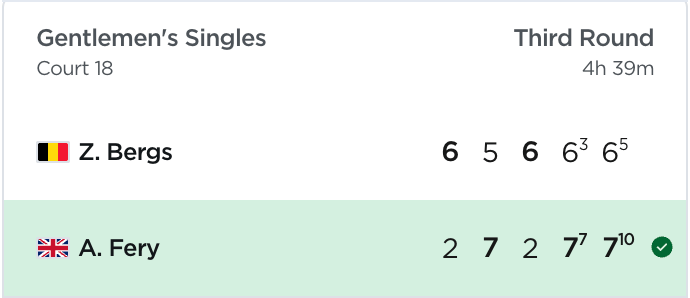
Imagine you’re playing in the fourth round at Wimbledon. You’re ranked No. 114 in the world. Not high enough to be accepted into the tournament, so you are one of eight wildcards invited to play. Two days ago you played No. 37 in the world for over four hours, battling through five sets (including two 10-point match tiebreaks) to progress to the next round.
Now, you’re in the midst of another four-hour marathon against the former world No. 3 player. Playing on Centre Court in front of 15,000 people. You push any thoughts of, “what the hell am I doing here?” to the farthest corner of your mind and lock TF in.
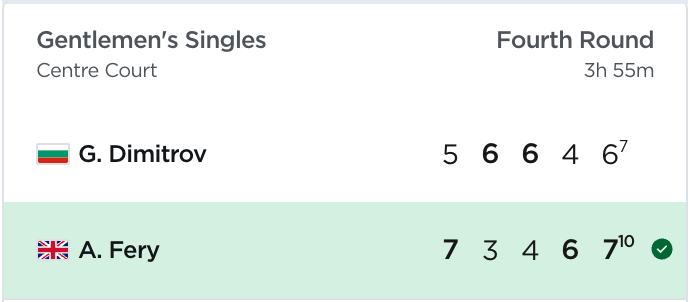
At the end of a match that was anyone’s until the very last point, you turn to your family, absolutely bewildered and exclaim, “what the f*ck?”. The crowd erupts. You’ve just become the first British wild card to reach the quarterfinals in any Grand Slam in 60 years. And your idol Roger Federer watched the whole thing. No biggie.
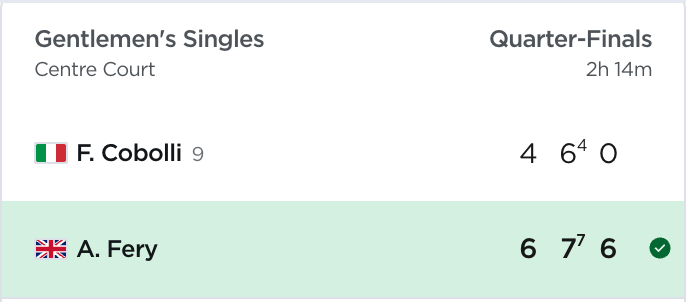
Two days later, you play the No. 9 seed, back on Centre Court (live audience of 15,000, five million TV viewers and Queen Camilla watching from the Royal Box). You, No. 114, beat No. 9 in straight sets. The final set is 6-0. What the f*ck.
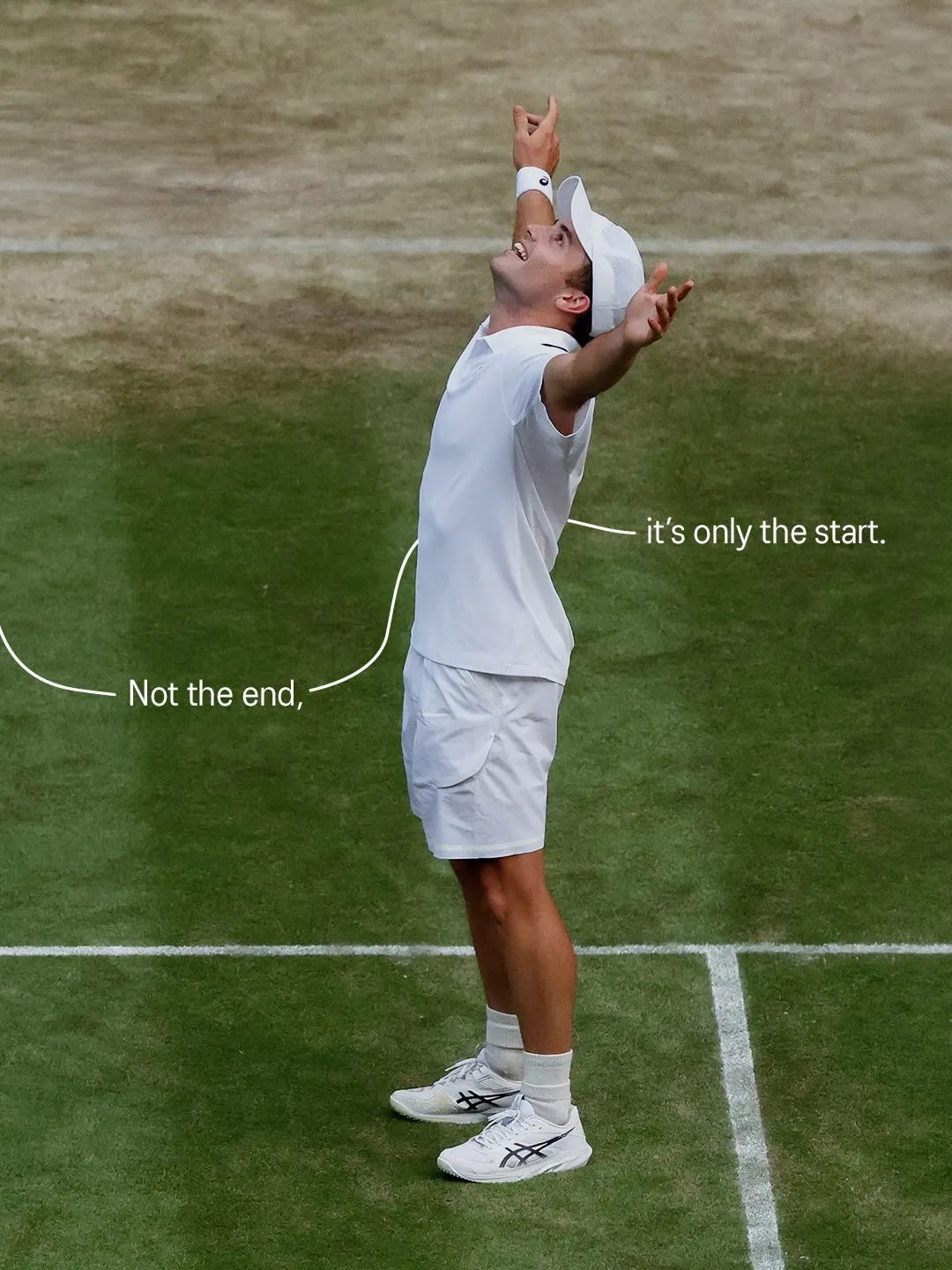
The odds at Wimbledon are not great: 99% chance of not winning. (And ultimately, Fery lost in the semi-finals). But, I was curious how he, an underdog, played so well in such intense matches knowing the odds of success.
In other words, how do elite athletes relate to failure?
Well, later on, I watched Coco Gauff lose in the semi-finals by two points in another 10-point match tie-break. Heartbreaking. In her post match interview, she said, “I think thousands of people would love to lose the semi-finals at Wimbledon on match point. It’s just one of those days where it didn’t go my way. Somebody had to lose, and unfortunately it was me today.”
She added, “I look at Roger [who] lost match points here, Jannik obviously at Roland Garros. Every great champion has this happen in their career. Maybe this is something I need to be on their level.”

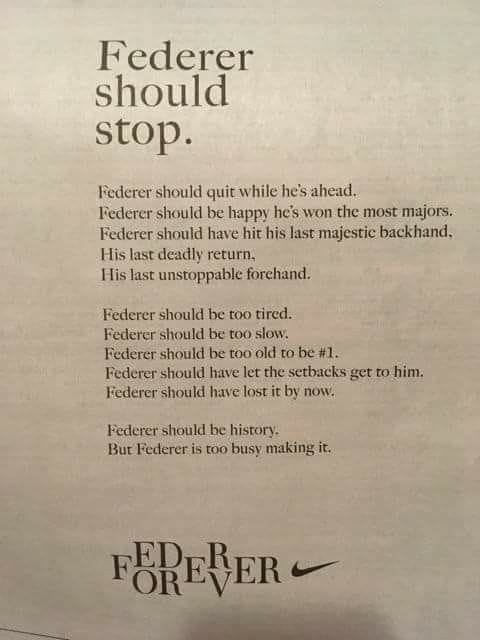
Speaking of Roger, do you remember when he revealed that over the course of his career, he only won 54% of the points he played? One of the greatest tennis players of all time only won half of his points.
If even at the highest level, failure is unavoidable, perhaps the question isn’t ‘how do I avoid failing?’ but ‘how do I use it?’
We hear all the time that success requires grit and resilience. You! must! bounce! back! from! adversity! But, there has to be more to it. I’d argue every athlete is resilient. What gave Federer the edge? Antifragility1. If resilience is the ability to return to your baseline after adversity, antifragility is the ability to use it to evolve. Exceptional people don’t see setbacks as proof they aren’t good enough, but as fuel.
Shortly after watching this match, I was browsing Youtube and stumbled upon an episode of The Knowledge Project. Intrigued by the title (No.1 Performance Psychologist: The Secret to High Performance and Excellence) (sue me!) I tuned in. The opening line was “most people are underperforming relative to their ability.” Come again?
He continued: We’re not designed to overperform, we’re designed to survive. Achieving one’s potential requires a cognitive decision to push oneself there. Underperformance is built into the human condition so we can stay alive. We are all programmed to seek comfort and safety, the exact opposite of over-performance.
In other words, our brains, in effort to protect us and keep us in our comfort zone, limit what we believe we can achieve. Our minds are not reliable narrators of what’s possible.
A few weeks ago, I was with my sister in Martha’s Vineyard. She says to me: everything’s a suggestion.
What?
Yeah, you don’t have to accept things as they are. It’s all just a suggestion.
If you operate under the assumption that things aren’t fixed, but ‘suggestions’ that you can accept or reject, you transform your experience into one with choices. Voila, you have agency.
You don’t have to accept everything you think. You don’t have to accept things other people say or believe about you. You don’t have to accept the first offer, in any scenario. (If you see an initial salary offer as a suggestion, negotiating becomes a lot less intimidating.) Someone else’s ceiling isn’t yours.
I’m going to leave you with the story of Rachel Entrekin. Earlier this year, she smashed the record for one of the most grueling ultramarathon races in the world. She finished the 250-mile race in 56 hours. SHE RAN FOR TWO AND A HALF DAYS, only sleeping for NINETEEN minutes total (in intervals of 7-7-5). She beat the prior record by two hours, her own personal record by six hours, and the person in 2nd place was ninety minutes behind her. She was the first woman, ever, to finish first.
Her mantra during the race was: Why not you? Why not now? Why not try?
“Somebody has to win, so ... why not believe that it could be you?”
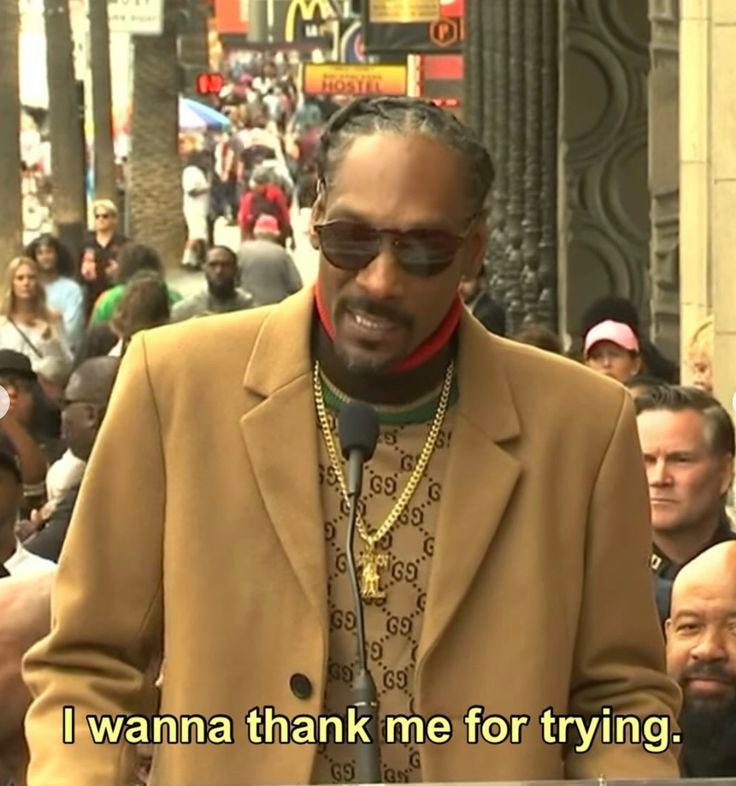
This is typically a travel newsletter…back to regularly scheduled programming next week!
Hi, I’m Waverly, based in LA and hotel-obsessed. I’m usually traveling, planning a trip, photographing hotels, interviewing people shaping hospitality or writing my next Substack. I’m glad you’re here! If you enjoyed reading this, I’d love to hear your thoughts in the comments.
Antifragility is the property of systems that thrive and grow stronger when exposed to stress, volatility, randomness, and disorder.
Amazing read! Love this! TY!
"Everything's a suggestion" ... that reframe alone is worth the price of admission. Agency is remembering that most ceilings are imaginary.